Oxyhydrogen Gas Welding Machines in the Jewelry Industry
Jan 07, 2026
In the modern jewelry manufacturing industry, precision, aesthetics, and environmental responsibility are becoming more important. In recent years, Oxyhydrogen gas welding machines, also known as water gas welders or HHO welders, have emerged as an efficient, clean, and precise alternative, particularly suitable for jewelry fabrication and repair. Traditional welding methods, such as gas torch welding, resistance welding, and even laser welding, it have certain limitations when it comes to fine operations, surface finish, and safety.
1. Working Principle of Oxyhydrogen Gas Welding
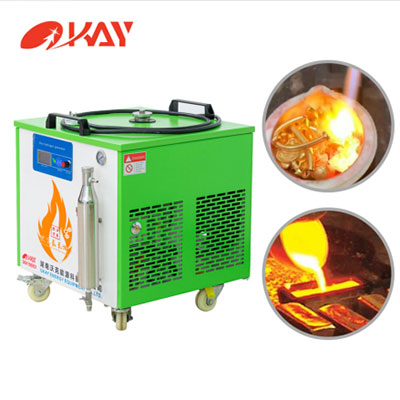
Oxyhydrogen welding machines work by electrolyzing pure water to generate a mixture of hydrogen (H₂) and oxygen (O₂) gases in a stoichiometric ratio of 2:1. This gas mixture, often referred to as Brown gas or HHO gas, is then ignited to produce a high-temperature flame of up to 3000°C.
The entire process results in the generation of clean energy, emitting only water vapor upon combustion, making it a zero-emission welding solution.
2.Advantages in Jewelry Manufacturing 2.1 High Precision and Easy control
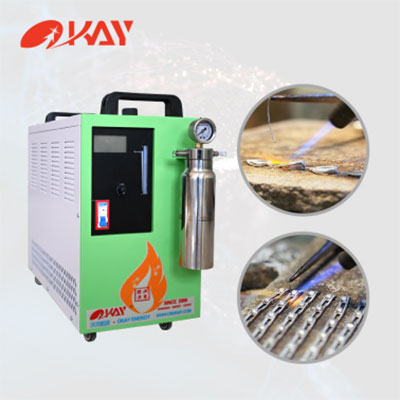
The oxyhydrogen flame is narrow, concentrated, and controllable, making it ideal for micro-welding tasks required in jewelry production. It allows jewelers to work on delicate components, such as prongs, clasps, chain links, and intricate filigree, with minimal thermal distortion.
2.2 Clean and Oxidation-Free Welding
Unlike traditional gas torches (using propane or acetylene), the HHO flame does not introduce carbon residues. The oxygen-rich combustion minimizes oxidation, especially important when working with silver, which easily tarnishes. Jewelry welded with oxyhydrogen generally requires less post-welding cleaning or polishing.
2.3 Environmentally Friendly and Safe
As the fuel is derived from pure water, there are no compressed gas cylinders, no harmful emissions (like CO or NOx), and no risk of gas leaks. This makes the technology safer for indoor use and aligns with eco-friendly manufacturing standards.
2.4 Cost-Effective Operations
Once installed, the machine only consumes water and electricity, significantly reducing the cost of consumables compared to traditional gas welding systems. Maintenance is also relatively low, as most systems are designed for long-term industrial use.
3. Applications in Jewelry Workshop
Oxy-hydrogen welding machines have found broad applications in:
Gold and silver chain welding
Ring resizing and repair
Soldering of platinum and palladium
Micro-repairs of antique or delicate pieces
Spot welding of findings (e.g., earring posts, jump rings)
Some high-precision models even allow integration with microscopes and foot pedals, enhancing control during complex welding tasks.
4. Conclusion
Oxyhydrogen welding machines represent a technologically advanced, eco-friendly, and cost-effective solution for the modern jewelry industry. Their ability to provide clean, precise, and safe welding makes them a valuable tool for artisans and manufacturers alike. As environmental regulations tighten and consumer demand for sustainable jewelry grows, oxyhydrogen welding will likely become a mainstream welding method in the jewelry sector.

.jpg)
.jpg)